Industry
iGaming
Client
Hyper Lucky
A Multi-Currency Cashier for a Crypto-First Casino.
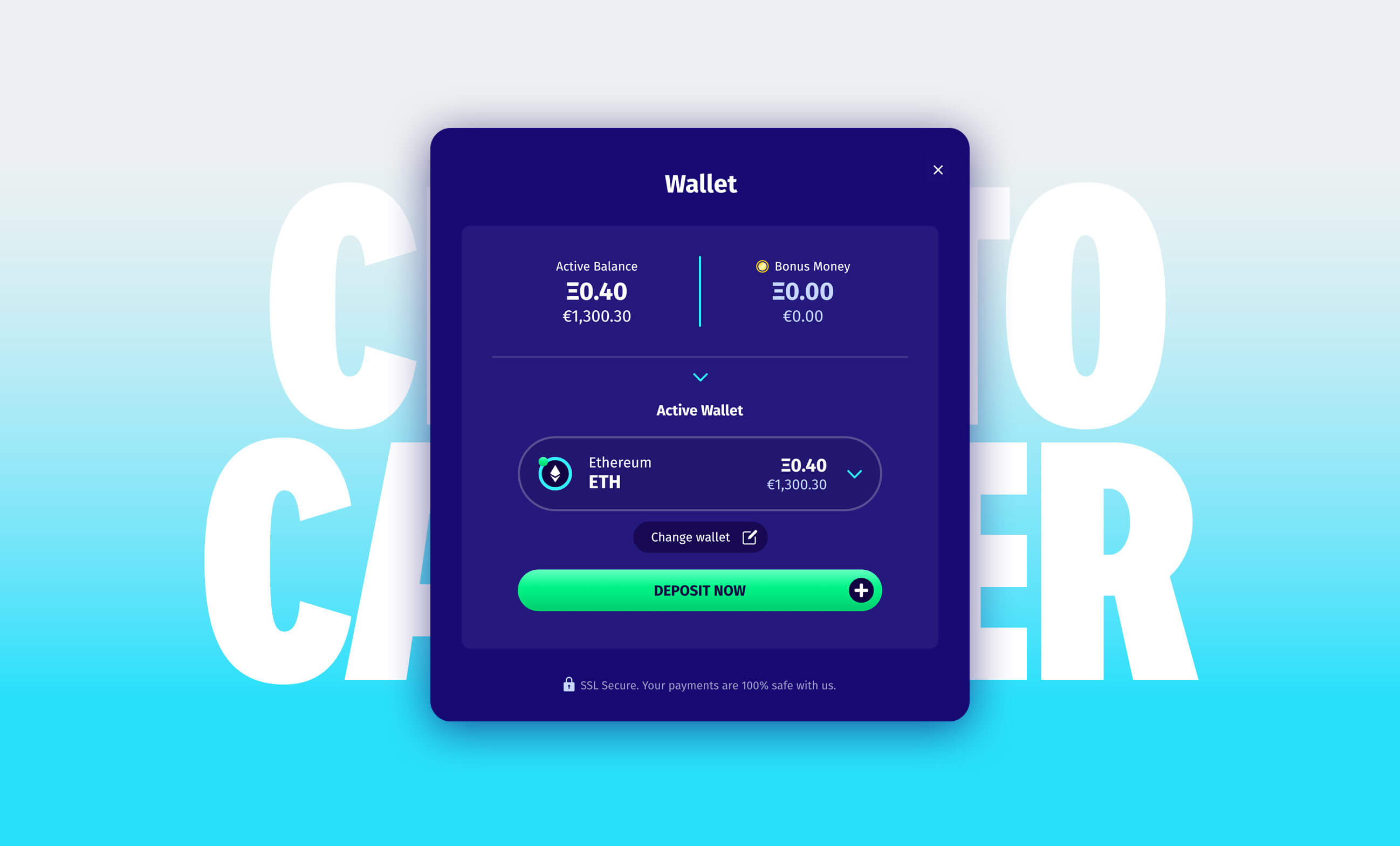
Hyper Lucky Crypto Cashier — Deposit Flow, Multi-Currency Wallet Switching, Site-wide Cashier UI, Side Panel & Pop-ups
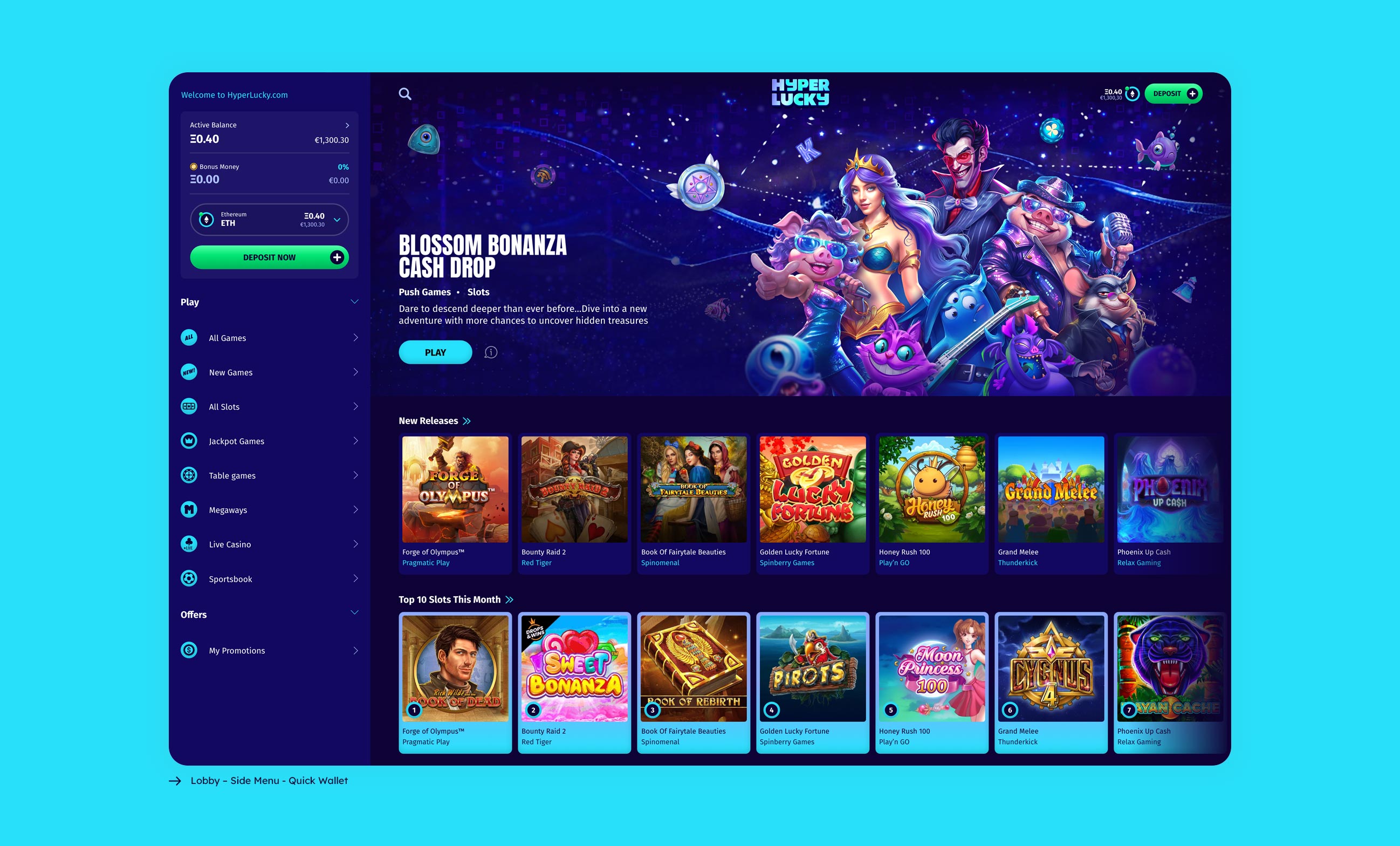
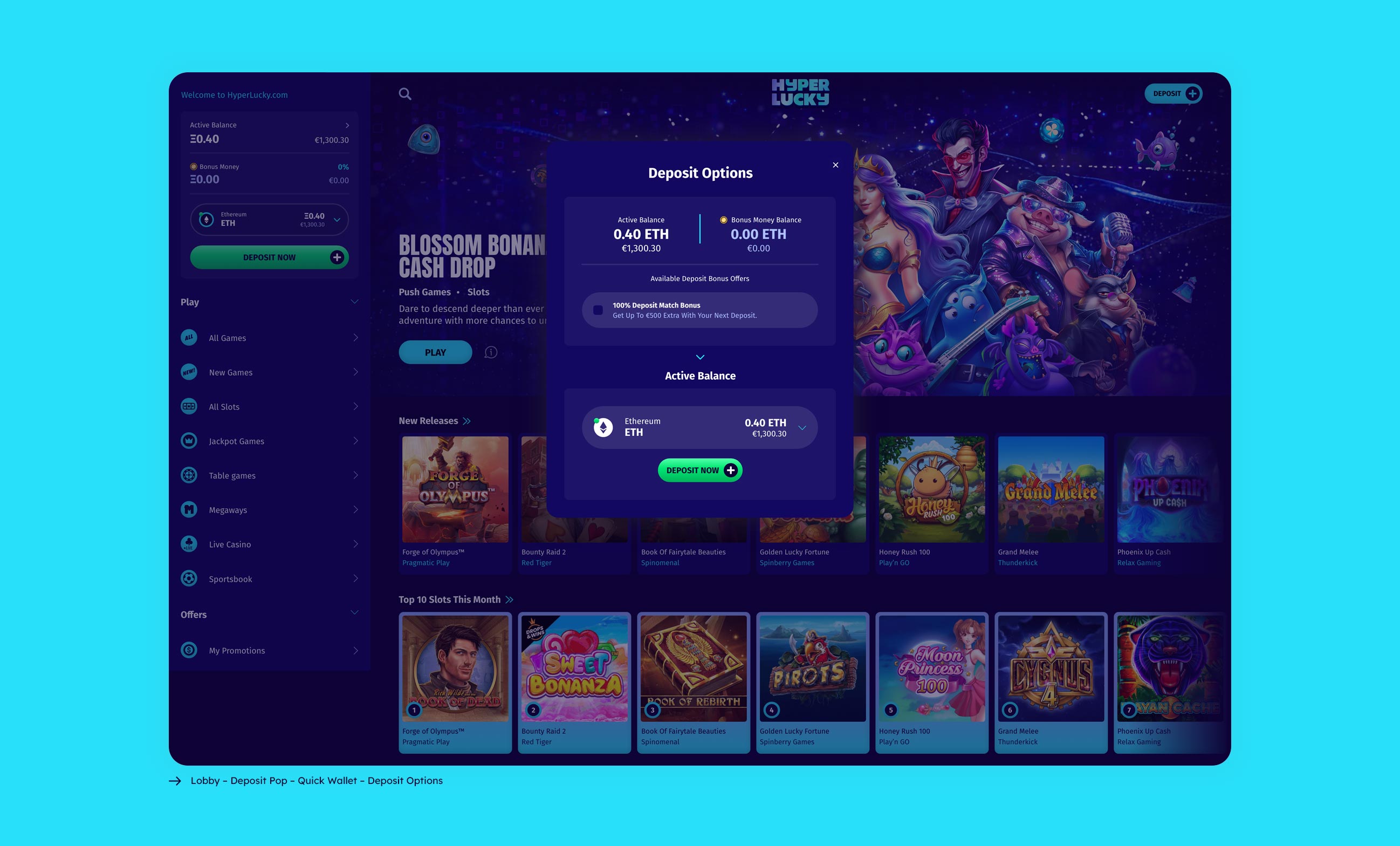
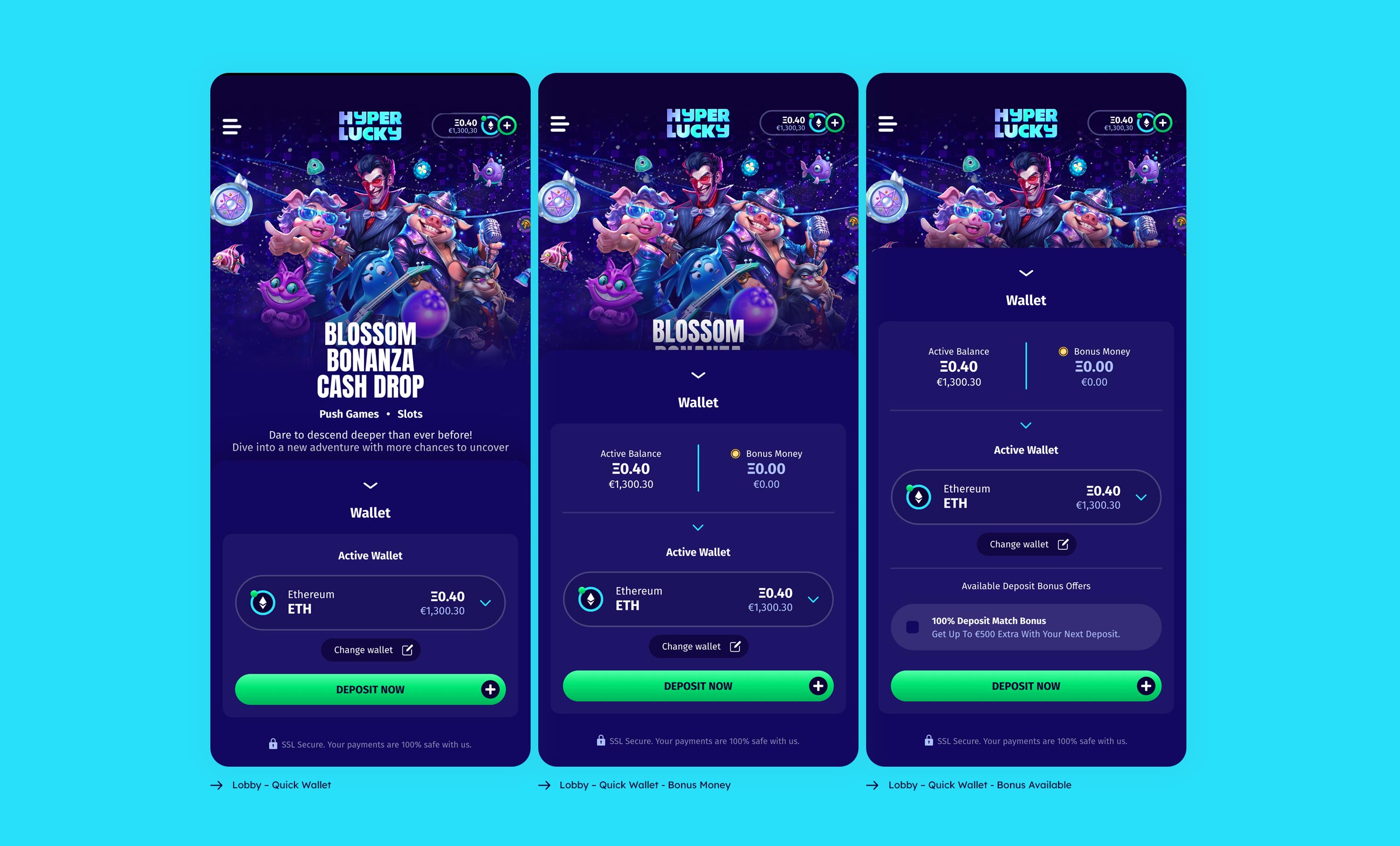
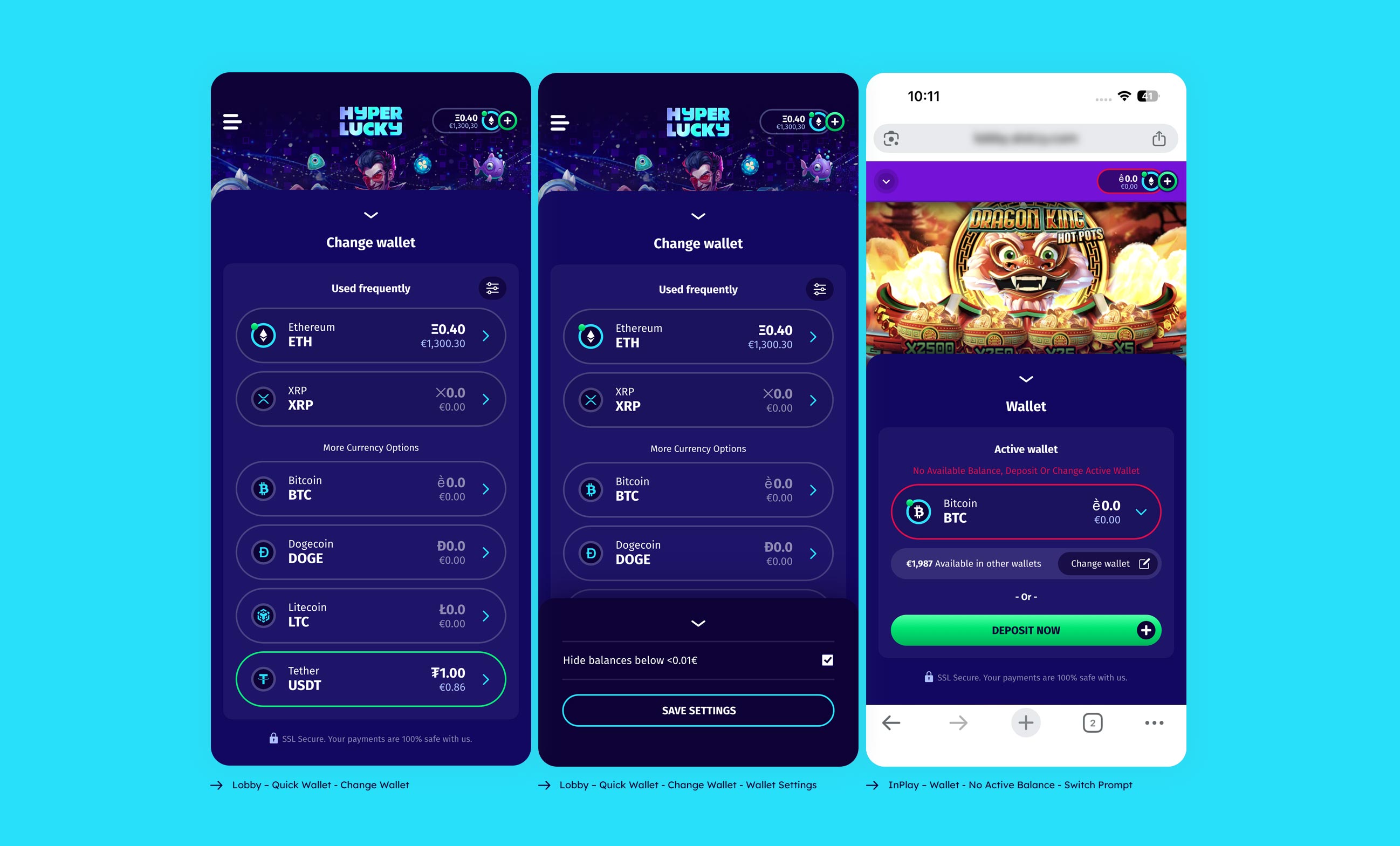
The assignment Hyper Lucky is a crypto-first casino. The studio took a proven casino template from its fiat portfolio and rebuilt the cashier on crypto payment rails, as a deliberate move into the crypto gambling market to draw players from that space. My scope was the on-site cashier experience: the multi-currency balance, the deposit flow, wallet switching, and the design of how all of this surfaces across the header, the side panel and the pop-ups. The buying and moving of crypto itself is handled by an integrated third-party payments provider, so my screens are the interface layer that sits on top of it on the casino side. That split shaped the work. With execution offloaded, the job on site was clarity and control: show players what they hold across several volatile currencies in a way they can read instantly, let them move between those currencies without friction, and keep all of it inside the familiar casino experience the template already provided. The six mobile screens below cover the wallet, the currency switch, the wallet settings, and the in-play prompt that appears when a balance runs out.
The thinking behind the design
The decision that does the most work is showing every balance in two values at once. Each wallet displays its crypto amount alongside a live euro figure, fed from the payments provider's price feed and updating in real time. When a player can be holding several volatile coins at the same time, a single live fiat reference is the quickest honest way to read what any balance is actually worth at a given moment, without the player having to track exchange rates themselves. Around that, the cashier inherits the conventions of the studio's existing casino product rather than inventing new ones. The persistent balance and deposit control sit in the top right, the green deposit action is where players expect it, and the lobby layout is unchanged, so the experience reads as an established casino that happens to run on crypto. Currency choice is managed rather than dumped on the player: a "Used frequently" group surfaces the wallets in active use, the longer list of supported coins sits under "More currency options", and a settings toggle hides dust balances below €0.01 to keep the list clean. The behaviour the brief leaned on hardest is switching wallets when a balance runs out. When an active wallet hits zero during play, the cashier surfaces the funds the player holds in other currencies and offers a one-tap switch, with a deposit as the alternative. The desktop version that follows reuses these same components inside a side panel and a deposit modal. The same wallet block, balance readout and deposit control appear in the header, the side panel and the pop-ups, drawn from one set of components so the cashier behaves as a single consistent system across every surface and breakpoint rather than a set of separate builds.